6th Edition of International Conference on Tissue Engineering and Regenerative Medicine
September 28-30 | London, UK

Craniofacial Bone Tissue Engineering
Craniofacial Bone Tissue Engineering is a cutting-edge field dedicated to developing innovative strategies for the regeneration and repair of bone structures in the craniofacial region. This area encompasses the bones of the skull, face, and jaw, which are vital for functions such as protection, support, and aesthetics. The field leverages principles from materials science, biology, and engineering to create scaffolds and biomimetic constructs that mimic the natural architecture of craniofacial bones. These constructs are often integrated with bioactive factors and cells to promote tissue regeneration. Researchers focus on identifying suitable cell sources, such as mesenchymal stem cells, and optimizing biomaterials to create scaffolds that provide mechanical support and encourage cell adhesion, proliferation, and differentiation. Techniques like 3D printing and bioprinting further enhance the precision and complexity of these constructs. Craniofacial bone tissue engineering aims to address challenges associated with trauma, congenital deformities, or surgical interventions that result in bone loss or damage. Successful craniofacial bone tissue engineering holds promise for personalized treatments, reducing the need for autografts or allografts and minimizing complications associated with traditional bone grafting methods. Ongoing research in this field contributes to advancements in regenerative medicine, with the potential to transform the landscape of craniofacial reconstruction, oral surgery, and orthopedics. In summary, craniofacial bone tissue engineering is a multidisciplinary pursuit aiming to develop effective and personalized solutions for the regeneration and reconstruction of bones in the craniofacial region, offering innovative alternatives to conventional approaches.

Kunal Mitra
Florida Tech, United States
Patrizia Ferretti
UCL Great Ormond Street Institute of Child Health, United Kingdom
Ivan Kelnar
Institute of Macromolecular Chemistry, Czech Academy of Sciences, Czech Republic
Aradhana Kasimsetty
National Center for Advancing Translational Sciences (NCATS), National Institutes of Health (NIH), United States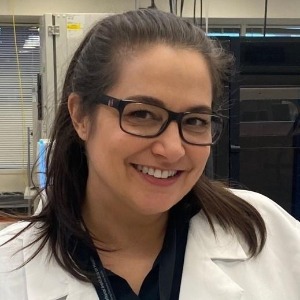
Paige Derr
National Institutes of Health, United States
Fairooza Alam
The Open University, United Kingdom
Katarzyna Gawron
Medical University of Silesia in Katowice, PolandSubmit your abstract Today


Title : The era of artificial intelligence (AI) and its use in regenerative medicine
Vasiliki E Kalodimou, European University-Cyprus Ltd, Cyprus
Title : The role of gingival fibroblasts in periodontal diseases and regeneration
Katarzyna Gawron, Medical University of Silesia in Katowice, Poland
Title : AI-integrated high-throughput tissue-chip for space-based biomanufacturing applications
Kunal Mitra, Florida Tech, United States
Title : Role of textile materials in tissue engineering and regenerative medicine
Gokarneshan Narayanan, SSM College of Engineering (Formerly), India
Title : Induction of neo angiogenesis: A way forward for reversing necrosis in complex wounds in orthopaedic practice
Sandeep Shrivastava, Datta Meghe Institute of Medical Sciences, India
Title : Silk-derived sericin at the interface of atopic dermatitis and wound healing: Modulation of inflammation and epidermal repair
Marek Konop, Medical University of Warsaw, Poland