
6th Edition of International Conference on Tissue Engineering and Regenerative Medicine
September 28-30 | London, UK

Microglial Cells
Microglial Cells are specialized immune cells residing in the central nervous system (CNS), where they play crucial roles in maintaining brain homeostasis and responding to various challenges. As resident macrophages of the CNS, microglia constantly survey their environment, detecting signs of infection, injury, or abnormal cellular activity. When activated, microglia undergo morphological changes and exhibit phagocytic activity, clearing cellular debris, pathogens, and abnormal proteins. Microglial cells contribute to the immune defense of the brain, participating in the inflammatory response to injuries or infections. However, their dysregulation can also lead to neuroinflammation, contributing to neurodegenerative diseases. Recent research has highlighted the diverse functions of microglia beyond immune responses. They are involved in synaptic pruning during development, maintaining neural circuits, and modulating synaptic plasticity. Dysfunction in microglial activity has been implicated in various neurological disorders, including Alzheimer's, Parkinson's, and multiple sclerosis. Advances in imaging technologies and molecular biology have enabled researchers to study microglial cells in greater detail, enhancing our understanding of their dynamic roles in the CNS. Targeting microglial activity is an area of interest in developing therapeutic strategies for neuroinflammatory and neurodegenerative conditions. Ongoing research continues to unravel the complexities of microglial biology, offering potential avenues for interventions to promote brain health and treat neurological disorders.

Kunal Mitra
Florida Tech, United States
Patrizia Ferretti
UCL Great Ormond Street Institute of Child Health, United Kingdom
Ivan Kelnar
Institute of Macromolecular Chemistry, Czech Academy of Sciences, Czech Republic
Aradhana Kasimsetty
National Center for Advancing Translational Sciences (NCATS), National Institutes of Health (NIH), United States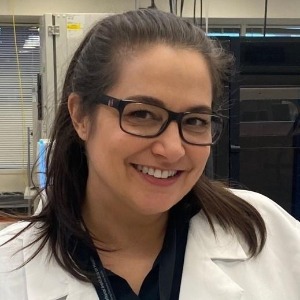
Paige Derr
National Institutes of Health, United States
Fairooza Alam
The Open University, United Kingdom
Katarzyna Gawron
Medical University of Silesia in Katowice, PolandSubmit your abstract Today


Title : The era of artificial intelligence (AI) and its use in regenerative medicine
Vasiliki E Kalodimou, European University-Cyprus Ltd, Cyprus
Title : The role of gingival fibroblasts in periodontal diseases and regeneration
Katarzyna Gawron, Medical University of Silesia in Katowice, Poland
Title : AI-integrated high-throughput tissue-chip for space-based biomanufacturing applications
Kunal Mitra, Florida Tech, United States
Title : Role of textile materials in tissue engineering and regenerative medicine
Gokarneshan Narayanan, SSM College of Engineering (Formerly), India
Title : Induction of neo angiogenesis: A way forward for reversing necrosis in complex wounds in orthopaedic practice
Sandeep Shrivastava, Datta Meghe Institute of Medical Sciences, India
Title : Silk-derived sericin at the interface of atopic dermatitis and wound healing: Modulation of inflammation and epidermal repair
Marek Konop, Medical University of Warsaw, Poland