HYBRID EVENT: Join us in person in London, UK or attend virtually from anywhere.
6th Edition of International Conference on Tissue Engineering and Regenerative Medicine
September 28-30 | London, UK

Cellular and Stem Cell Differentiation
Cellular and Stem Cell Differentiation
Cell differentiation is the process by which dividing cells change their functional or phenotypical type. All cells presumably derive from stem cells and obtain their functions as they mature. Cellular composition is often modeled as a hierarchical scheme with stem cells at the top of the hierarchy.
Stem cell differentiation involves the changing of a cell to a more specialized cell type, involving a switch from proliferation to specialization. This involves a succession of alterations in cell morphology, membrane potential, metabolic activity and responsiveness to certain signals.
Committee Members
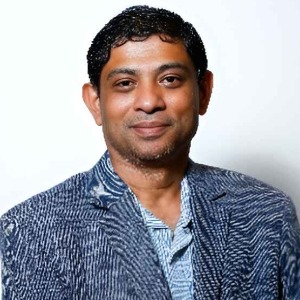
Kunal Mitra
Florida Tech, United States
Patrizia Ferretti
UCL Great Ormond Street Institute of Child Health, United Kingdom
Ivan Kelnar
Institute of Macromolecular Chemistry, Czech Academy of Sciences, Czech Republic TERMC 2026 Speakers
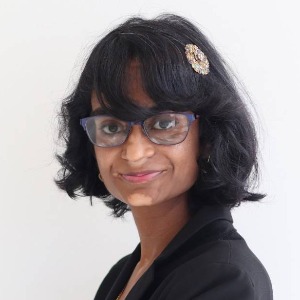
Aradhana Kasimsetty
National Center for Advancing Translational Sciences (NCATS), National Institutes of Health (NIH), United States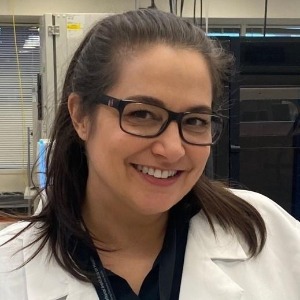
Paige Derr
National Institutes of Health, United States
Fairooza Alam
The Open University, United Kingdom
Katarzyna Gawron
Medical University of Silesia in Katowice, PolandSubmit your abstract Today


Title : The era of artificial intelligence (AI) and its use in regenerative medicine
Vasiliki E Kalodimou, European University-Cyprus Ltd, Cyprus
Title : The role of gingival fibroblasts in periodontal diseases and regeneration
Katarzyna Gawron, Medical University of Silesia in Katowice, Poland
Title : AI-integrated high-throughput tissue-chip for space-based biomanufacturing applications
Kunal Mitra, Florida Tech, United States
Title : Role of textile materials in tissue engineering and regenerative medicine
Gokarneshan Narayanan, SSM College of Engineering (Formerly), India
Title : Induction of neo angiogenesis: A way forward for reversing necrosis in complex wounds in orthopaedic practice
Sandeep Shrivastava, Datta Meghe Institute of Medical Sciences, India
Title : Silk-derived sericin at the interface of atopic dermatitis and wound healing: Modulation of inflammation and epidermal repair
Marek Konop, Medical University of Warsaw, Poland