
Carbon-neutral materials refer to substances and products that, over their entire lifecycle, balance the amount of carbon emitted with an equivalent amount sequestered or offset. These materials play a crucial role in mitigating climate change by reducing the net release of carbon dioxide into the atmosphere. Sustainable forestry practices contribute to carbon-neutral materials, as responsibly managed forests absorb and sequester carbon dioxide, offsetting emissions associated with the harvesting and processing of wood-based products. Innovative building materials, like carbon-sequestering concrete, capture and store carbon dioxide during their production, creating a net-zero or even negative carbon footprint. Recycled materials, when properly processed, offer a carbon-neutral alternative to virgin materials by diverting waste from landfills and reducing the energy required for extraction and manufacturing. Life cycle assessments and carbon offset programs further enhance the credibility of carbon-neutral materials, ensuring a holistic approach to environmental impact and sustainability. As industries increasingly prioritize carbon neutrality, the development and adoption of such materials become vital in the global effort to combat climate change.
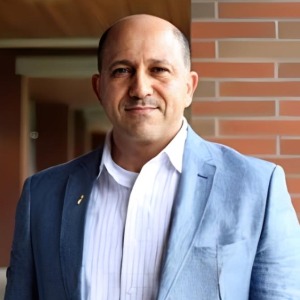
Hossam A Gabbar
Ontario Tech University, Canada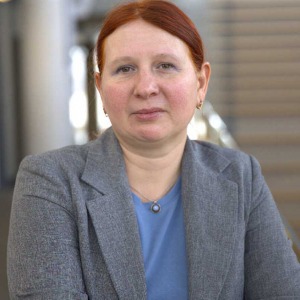
Olena V Zenkina
Ontario Tech University, Canada
Tomayess Issa
Curtin University, Australia
Orchidea Maria Lecian
Sapienza University of Rome, Italy
Anne Marteel Parrish
Washington College, United States
Rudra Sarkar
Indian Institute of Petroleum and Energy, India
Laxmi J Hathiya
Saurashtra University, India
Ahmed Diab Mohamed Ahmed El Esawy
Drinking Water and Sanitation Company, Egypt
Oumaima Cherradi
University Mohammed VI Polytechnic, Morocco
Fatemehsadat Mirmohammadmakki
Islamic Azad University, Iran (Islamic Republic of)Submit your abstract Today


Title : Hydrocracking theory and technology
Orchidea Maria Lecian, Sapienza University of Rome, Italy
Title : Advances in plasma-based waste treatment for sustainable communities
Hossam A Gabbar, Ontario Tech University, Canada
Title : Beyond business as usual: Advancing ethical sustainability education through indigenous knowledge, industry engagement, and real-world impact
Tomayess Issa, Curtin University, Australia
Title : AI-enabled circular economy and green chemistry: accelerating net-zero and sustainable industrial transformation
Anthony Halog, The University of Queensland, Australia
Title : Optical investigations of Zn-doped CuO nanostructure
Yarub Al Douri, European Academy of Sciences, Belgium
Title : Generalized green and red concepts: Environmental sustainability of AI, big data, ICT, and general green technologies
Jinsong Wu, University of Chile, Chile
Title : Crystallographic transformations and energy relations of thermomechanical processes in shape memory alloys
Osman Adiguzel, Firat University, Turkey
Title : Structural and gas-sensing properties of nano-structured mixed ferrites synthesized by citrate-gel auto-combustion technique
Laxmi J Hathiya, Saurashtra University, India
Title : Antibacterial activity of bioactive compounds extracted from the Egyptian untapped green algae Rhizoclonium hieroglyphicum
Ahmed Diab Mohamed Ahmed El Esawy, Drinking Water and Sanitation Company, Egypt
Title : Greener chemistry for a sustainable future: Transforming chemistry education through systems thinking
Anne Marteel Parrish, Washington College, United States