
Renewable feedstock chemists are reengineering the foundation of chemical synthesis by replacing fossil-based raw materials with sustainable, bio-derived alternatives. Their work centers on identifying, extracting, and converting feedstocks such as agricultural waste, lignocellulosic biomass, algae, and plant oils into functional chemical building blocks. Unlike traditional petrochemical routes, these renewable sources offer lower carbon footprints and often integrate seamlessly into existing supply chains when processed efficiently. Through catalytic conversion, thermochemical pathways, and biotechnological methods, these chemists develop versatile intermediates like bio-alcohols, organic acids, and furan derivatives that serve as precursors for polymers, fuels, solvents, and specialty chemicals.
Beyond laboratory synthesis, renewable feedstock chemists actively engage with scalability, economic viability, and compatibility with current industrial infrastructure. Their innovations help bridge the gap between green chemistry principles and market-ready products, making sustainability a practical reality for manufacturers across sectors. They also conduct environmental and techno-economic assessments to ensure their solutions provide genuine benefits over incumbent materials. Close collaboration with biorefineries, policy makers, and life cycle analysts allows their work to influence not just product development, but also resource management and sustainability standards at a broader level. By tapping into renewable carbon sources, these chemists are redefining the chemical value chain from its origin, supporting a systemic transition toward cleaner, more circular production systems.
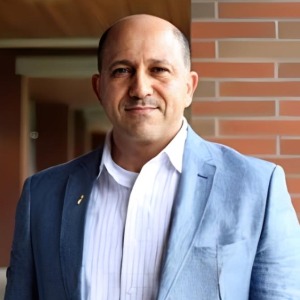
Hossam A Gabbar
Ontario Tech University, Canada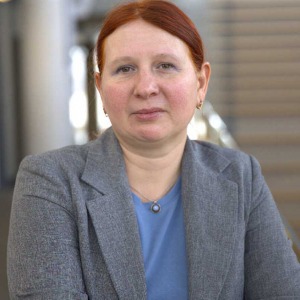
Olena V Zenkina
Ontario Tech University, Canada
Tomayess Issa
Curtin University, Australia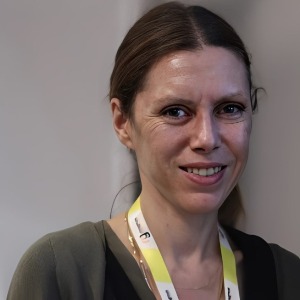
Orchidea Maria Lecian
Sapienza University of Rome, Italy
Anne Marteel Parrish
Washington College, United States
Rudra Sarkar
Indian Institute of Petroleum and Energy, India
Laxmi J Hathiya
Saurashtra University, India
Ahmed Diab Mohamed Ahmed El Esawy
Drinking Water and Sanitation Company, Egypt
Oumaima Cherradi
University Mohammed VI Polytechnic, Morocco
Fatemehsadat Mirmohammadmakki
Islamic Azad University, Iran (Islamic Republic of)Submit your abstract Today


Title : Hydrocracking theory and technology
Orchidea Maria Lecian, Sapienza University of Rome, Italy
Title : Advances in plasma-based waste treatment for sustainable communities
Hossam A Gabbar, Ontario Tech University, Canada
Title : Beyond business as usual: Advancing ethical sustainability education through indigenous knowledge, industry engagement, and real-world impact
Tomayess Issa, Curtin University, Australia
Title : AI-enabled circular economy and green chemistry: accelerating net-zero and sustainable industrial transformation
Anthony Halog, The University of Queensland, Australia
Title : Optical investigations of Zn-doped CuO nanostructure
Yarub Al Douri, European Academy of Sciences, Belgium
Title : Generalized green and red concepts: Environmental sustainability of AI, big data, ICT, and general green technologies
Jinsong Wu, University of Chile, Chile
Title : Crystallographic transformations and energy relations of thermomechanical processes in shape memory alloys
Osman Adiguzel, Firat University, Turkey
Title : Structural and gas-sensing properties of nano-structured mixed ferrites synthesized by citrate-gel auto-combustion technique
Laxmi J Hathiya, Saurashtra University, India
Title : Antibacterial activity of bioactive compounds extracted from the Egyptian untapped green algae Rhizoclonium hieroglyphicum
Ahmed Diab Mohamed Ahmed El Esawy, Drinking Water and Sanitation Company, Egypt
Title : Greener chemistry for a sustainable future: Transforming chemistry education through systems thinking
Anne Marteel Parrish, Washington College, United States