
A smart grid is an electricity network that allows devices to communicate between providers and consumers to control demand, safeguard the distribution network, save energy, and save money. It is a digitally-based electrical network that uses two-way digital communication to supply electricity to users. This system enables for supply chain monitoring, analysis, control, and communication in order to improve efficiency, lower energy consumption and costs, and increase the energy supply chain's transparency and reliability.
Grid modernization has become a catch-all term for the improvements required in the power grid to handle all of the rapid technical advances occurring in electric power generation, transmission, and distribution.
When the continuous and discrete meet, hybrid systems arise. A hybrid system combines continuous and discrete inputs, outputs, states, or dynamics. Hybrid systems are formed when continuous physical processes are governed by finite-state logic (as in embedded control systems) or when topological and network limitations interact with continuous control (as in networked control systems).
- Reinforcing our global competitiveness
- Fully accommodating renewable and traditional energy sources
- Potentially reducing our carbon footprint
- Hybrid automaton
- Sliding mode control
- Variable structure system

Hossam A Gabbar
Ontario Tech University, Canada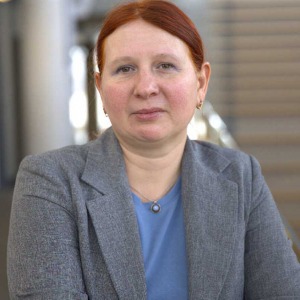
Olena V Zenkina
Ontario Tech University, Canada
Tomayess Issa
Curtin University, Australia
Orchidea Maria Lecian
Sapienza University of Rome, Italy
Anne Marteel Parrish
Washington College, United States
Rudra Sarkar
Indian Institute of Petroleum and Energy, India
Laxmi J Hathiya
Saurashtra University, India
Ahmed Diab Mohamed Ahmed El Esawy
Drinking Water and Sanitation Company, Egypt
Oumaima Cherradi
University Mohammed VI Polytechnic, Morocco
Fatemehsadat Mirmohammadmakki
Islamic Azad University, Iran (Islamic Republic of)Submit your abstract Today


Title : Hydrocracking theory and technology
Orchidea Maria Lecian, Sapienza University of Rome, Italy
Title : Advances in plasma-based waste treatment for sustainable communities
Hossam A Gabbar, Ontario Tech University, Canada
Title : Beyond business as usual: Advancing ethical sustainability education through indigenous knowledge, industry engagement, and real-world impact
Tomayess Issa, Curtin University, Australia
Title : AI-enabled circular economy and green chemistry: accelerating net-zero and sustainable industrial transformation
Anthony Halog, The University of Queensland, Australia
Title : Optical investigations of Zn-doped CuO nanostructure
Yarub Al Douri, European Academy of Sciences, Belgium
Title : Generalized green and red concepts: Environmental sustainability of AI, big data, ICT, and general green technologies
Jinsong Wu, University of Chile, Chile
Title : Crystallographic transformations and energy relations of thermomechanical processes in shape memory alloys
Osman Adiguzel, Firat University, Turkey
Title : Structural and gas-sensing properties of nano-structured mixed ferrites synthesized by citrate-gel auto-combustion technique
Laxmi J Hathiya, Saurashtra University, India
Title : Antibacterial activity of bioactive compounds extracted from the Egyptian untapped green algae Rhizoclonium hieroglyphicum
Ahmed Diab Mohamed Ahmed El Esawy, Drinking Water and Sanitation Company, Egypt
Title : Greener chemistry for a sustainable future: Transforming chemistry education through systems thinking
Anne Marteel Parrish, Washington College, United States