International Conference on Analytical and Bioanalytical Techniques
Analytical Techniques for Clinical Chemistry
Clinical chemistry is a quantitative science that deals with determining the concentrations of biologically relevant compounds (known as analytes) in body fluids. These compounds' concentrations are measured using methods that have been carefully designed to deliver accurate results. Clinical chemistry is an intriguing discipline that integrates analytics and instruments with information technology and workflow management, as well as high-volume automation and personnel efficiencies. Professionals must be knowledgeable about techniques and their constraints, as well as technology and troubleshooting equipment, as well as management and the ability to adjust operations to changing clinical needs. Clinical chemistry is a subspecialty of laboratory medicine that focuses on molecules. The concentrations of biologically relevant ions (salts and minerals), small organic compounds, and large macromolecules are measured in a clinical chemistry laboratory (primarily proteins).

Jose Bernal
University of Valladolid, Spain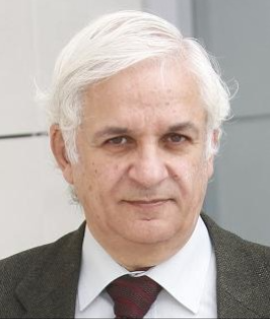
Victor Cerda
Sciware Systems, Spain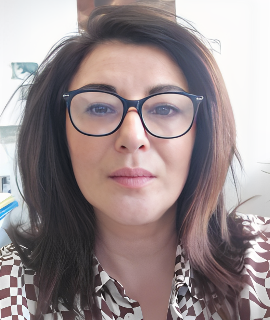
Maria Jesus Villasenor Llerena
Castilla- La Mancha University, Spain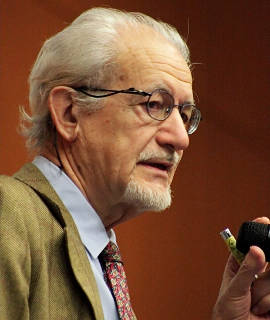
Pier Giorgio Righetti
Politecnico di Milano, Italy
Vittoria Guglielmi
University of Milan, Italy
Ana Maria Ares Sacristan
University of Valladolid, Spain
Cristina Gutierrez Sanchez
Universidad Autonoma de Madrid, Spain

Title : Chromatographic methods for authenticating bee pollen origin
Jose Bernal, University of Valladolid, Spain
Title : Raman spectroscopy and imaging in organization, processing and functionalization of polysaccharide materials
Pieter Samyn, Department of Innovations in Circular Economy and Renewable Materials, SIRRIS, Leuven, Belgium
Title : Portable and laboratory analytical photometric and fluorometric systems based on the use of 3D printed devices
Victor Cerda, Sciware Systems, Spain
Title : Electrochemical properties and sensing capacities of different carbon-based nanodots toward the detection of bioactives in complex matrices
Maria Jesus Villasenor Llerena, Castilla- La Mancha University, Spain
Title : Development of new creep prediction model for use through computational modelling for SS-304 material
Mohsin Sattar, Universiti Teknologi Petronas, Malaysia
Title : DNA-templated silver nanoclusters light up tryptophan for combined detection of plasma tryptophan and albumin in sepsis
Jingpu Zhang, Shanghai Public Health Clinical Center, China