International Conference on Analytical and Bioanalytical Techniques
Chemometrics and Spectroscopics in Analytical Chemistry
Chemometrics is the science of using data to derive information from chemical systems. Chemometrics is an intrinsically interdisciplinary field that applies methods from basic data-analytic disciplines like multivariate statistics, applied mathematics, and computer science to problems in chemistry, biochemistry, medicine, biology, and chemical engineering. Using current scientific and technological advancements, old and new challenges are regularly approached with cutting-edge technologies in order to achieve alternative and precise answers. Chemometrics, which encompasses useful solutions for solving a variety of analytical challenges in both laboratory and industrial-scale settings, has played a vital role in that field in recent years. Chemometric approaches allow for the handling of complex chemical data and the maximum extraction of the available and valuable information encoded; also, their broad applicability and flexibility allow for their use in a variety of sectors. Chemometrics is one of the winning cards for solving many modern chemical challenges for all of these reasons.
Spectroscopy is the study of how energy interacts with matter as electromagnetic radiation (EMR), acoustic waves, or particle beams. Spectroscopy is used in a variety of analytical techniques, and it provides a set of tools for both identifying (qualitative analysis) and measuring (quantitative analysis) atoms, ions, and molecules. Spectrochemical analysis is a type of chemical analysis that relies on the wavelength and intensity of electromagnetic radiation being measured. To achieve both the separation and measurement of multicomponent samples, spectroscopic methods can be used alone or in combination with chromatography in many circumstances.

Jose Bernal
University of Valladolid, Spain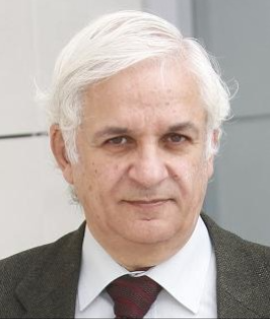
Victor Cerda
Sciware Systems, Spain
Maria Jesus Villasenor Llerena
Castilla- La Mancha University, Spain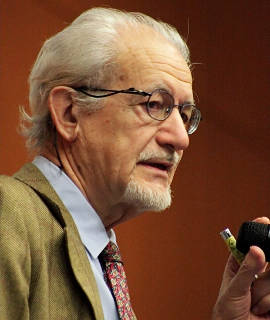
Pier Giorgio Righetti
Politecnico di Milano, Italy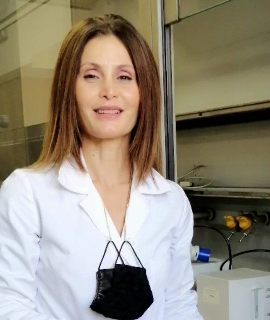
Vittoria Guglielmi
University of Milan, Italy
Ana Maria Ares Sacristan
University of Valladolid, Spain
Cristina Gutierrez Sanchez
Universidad Autonoma de Madrid, Spain

Title : Chromatographic methods for authenticating bee pollen origin
Jose Bernal, University of Valladolid, Spain
Title : Raman spectroscopy and imaging in organization, processing and functionalization of polysaccharide materials
Pieter Samyn, Department of Innovations in Circular Economy and Renewable Materials, SIRRIS, Leuven, Belgium
Title : Portable and laboratory analytical photometric and fluorometric systems based on the use of 3D printed devices
Victor Cerda, Sciware Systems, Spain
Title : Electrochemical properties and sensing capacities of different carbon-based nanodots toward the detection of bioactives in complex matrices
Maria Jesus Villasenor Llerena, Castilla- La Mancha University, Spain
Title : Development of new creep prediction model for use through computational modelling for SS-304 material
Mohsin Sattar, Universiti Teknologi Petronas, Malaysia
Title : DNA-templated silver nanoclusters light up tryptophan for combined detection of plasma tryptophan and albumin in sepsis
Jingpu Zhang, Shanghai Public Health Clinical Center, China