International Conference on Analytical and Bioanalytical Techniques
Other Applications in Analytics and bio analytics
Modern biosciences rely heavily on analytical approaches as enabling tools. Techniques for determining and analysing biological molecules are known as bio-analytics. These methods are critical for probing the molecular underpinnings of biological systems and identifying prospective treatment targets. Bioanalysis is a branch of analytical chemistry that deals with quantifying xenobiotics (drugs and their metabolites, as well as biological molecules in unusual places or amounts) and biotics (macromolecules, proteins, DNA, large-molecule medications, and metabolites) in biological systems. Bioanalysis has long been associated with the measurement of small molecule medications. Biopharmaceuticals (e.g., proteins and peptides), which have been produced to treat many of the same ailments as small molecules, have increased in popularity during the last two decades. Quantification of these bigger macromolecules has presented its own set of problems.

Jose Bernal
University of Valladolid, Spain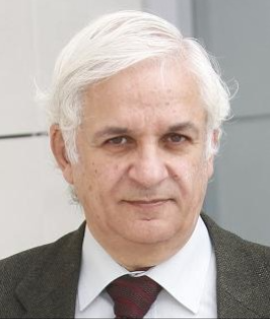
Victor Cerda
Sciware Systems, Spain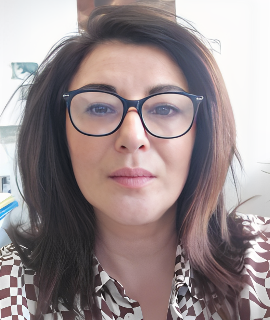
Maria Jesus Villasenor Llerena
Castilla- La Mancha University, Spain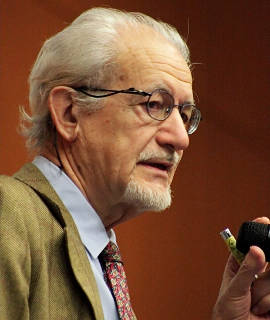
Pier Giorgio Righetti
Politecnico di Milano, Italy
Vittoria Guglielmi
University of Milan, Italy
Ana Maria Ares Sacristan
University of Valladolid, Spain
Cristina Gutierrez Sanchez
Universidad Autonoma de Madrid, Spain

Title : Chromatographic methods for authenticating bee pollen origin
Jose Bernal, University of Valladolid, Spain
Title : Raman spectroscopy and imaging in organization, processing and functionalization of polysaccharide materials
Pieter Samyn, Department of Innovations in Circular Economy and Renewable Materials, SIRRIS, Leuven, Belgium
Title : Portable and laboratory analytical photometric and fluorometric systems based on the use of 3D printed devices
Victor Cerda, Sciware Systems, Spain
Title : Electrochemical properties and sensing capacities of different carbon-based nanodots toward the detection of bioactives in complex matrices
Maria Jesus Villasenor Llerena, Castilla- La Mancha University, Spain
Title : Development of new creep prediction model for use through computational modelling for SS-304 material
Mohsin Sattar, Universiti Teknologi Petronas, Malaysia
Title : DNA-templated silver nanoclusters light up tryptophan for combined detection of plasma tryptophan and albumin in sepsis
Jingpu Zhang, Shanghai Public Health Clinical Center, China