International Conference on Analytical and Bioanalytical Techniques
Spectroscopy And Spectrometry
The study and measurement of spectra formed by matter interacting with or producing electromagnetic radiation is known as spectroscopy. The study of the interaction between radiation and matter as a function of wavelength was originally termed as spectroscopy. Any measurement of a quantity as a function of wavelength or frequency is now referred to as spectroscopy. During a spectroscopy experiment, electromagnetic radiation from a source passes through a sample containing molecules of interest, resulting in absorption or emission. The sample absorbs energy from the light source during absorption. During emission, the sample emits light with a wavelength that differs from that of the source. The sample's components are stimulated by electromagnetic radiation given by a light source in absorption spectroscopy. Their molecules absorb electromagnetic radiation's energy, become excited, and leap from a low-energy ground state to a higher-energy excitation state. On the other side of the sample, a detector, commonly a photodiode, records the sample's absorption of wavelengths and determines its extent of absorption. The absorption spectrum of a sample is the spectrum of absorbed wavelengths, while the absorbance is the amount of light absorbed by a sample.
Any instrument used to view and analyse a range (or spectrum) of a given characteristic for a substance (for example, a range of mass-to-charge values as in mass spectrometry, or a range of wavelengths as in absorption spectrometry such as nuclear magnetic radiation spectroscopy or infrared spectroscopy). A spectrophotometer is a type of spectrometer that only measures the intensity of electromagnetic radiation (light). It differs from other spectrometers such as mass spectrometers in that it only measures the intensity of electromagnetic radiation (light). A spectrometer is a device that measures the wavelengths of electromagnetic radiation (light) that interacts with a sample. Incident light can be reflected off, absorbed by, or transmitted through a sample; the way the incident light varies throughout this interaction is unique to the sample. This variation is measured by a spectrometer over a variety of incident wavelengths (or at a specific wavelength).

Jose Bernal
University of Valladolid, Spain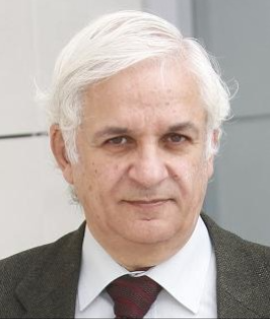
Victor Cerda
Sciware Systems, Spain
Maria Jesus Villasenor Llerena
Castilla- La Mancha University, Spain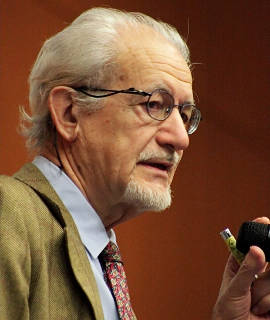
Pier Giorgio Righetti
Politecnico di Milano, Italy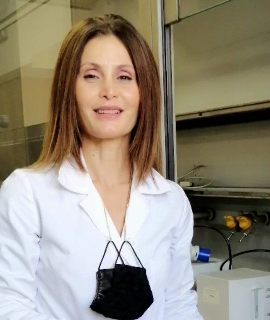
Vittoria Guglielmi
University of Milan, Italy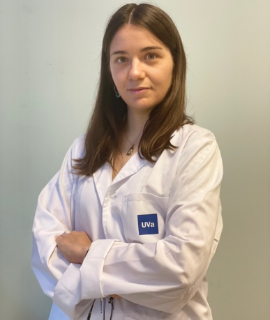
Ana Maria Ares Sacristan
University of Valladolid, Spain
Cristina Gutierrez Sanchez
Universidad Autonoma de Madrid, Spain

Title : Chromatographic methods for authenticating bee pollen origin
Jose Bernal, University of Valladolid, Spain
Title : Raman spectroscopy and imaging in organization, processing and functionalization of polysaccharide materials
Pieter Samyn, Department of Innovations in Circular Economy and Renewable Materials, SIRRIS, Leuven, Belgium
Title : Portable and laboratory analytical photometric and fluorometric systems based on the use of 3D printed devices
Victor Cerda, Sciware Systems, Spain
Title : Electrochemical properties and sensing capacities of different carbon-based nanodots toward the detection of bioactives in complex matrices
Maria Jesus Villasenor Llerena, Castilla- La Mancha University, Spain
Title : Development of new creep prediction model for use through computational modelling for SS-304 material
Mohsin Sattar, Universiti Teknologi Petronas, Malaysia
Title : DNA-templated silver nanoclusters light up tryptophan for combined detection of plasma tryptophan and albumin in sepsis
Jingpu Zhang, Shanghai Public Health Clinical Center, China