
Virtual Healthcare and Pharmaceuticals
Virtual healthcare refers to the “virtual visits” that take place between patients and clinicians via technology – the visual and audio connectivity that allows “virtual” interactions to take place in real time, from practically any location. A videoconference between a doctor and a patient at home can be considered a virtual visit. Pharma companies have been collaborating with digital and data companies for some years to figure out how to effectively use virtual health and how it might improve processes throughout the business continuum. Virtual health technologies will allow the pharmaceutical sector to have a larger engagement with patients and clinicians across many touchpoints.
- Telehealth
- Revolutionizing Healthcare
- Recent Trends in Virtual Healthcare
Committee Members

A C Matin
Stanford University, United States
Consolato M Sergi
Universities of Alberta and Ottawa, Canada
Luis Jesus Villarreal Gomez
Autonomous University of Baja California, Mexico Pharma 2023 Speakers

John K Maesaka
NYU Langone Hospital Long Island, United States
Richard Denk
SKAN AG, Switzerland
Peter B Chase
Essentia Health- St. Mary's Medical Center, United States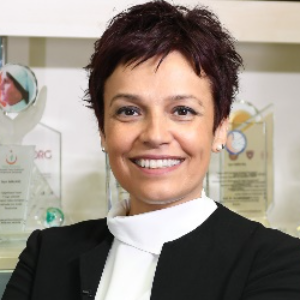
Saliha Koc Aslan
Acibadem Healthcare Group, Turkey
Ana Isabel Rocha Faustino
University of Evora, Portugal
Narapereddy Krishna Prasad
Reckitt Benckiser LLC, United States
Title : Extracellular vesicles as delivery vehicles of therapeutic compounds
Stefania Raimondo, University of Palermo, Italy
Title : EU GMP annex1 barrier system and PIC/s annex 2A on cell and gene therapy
Richard Denk, SKAN AG, Switzerland
Title : Role of nanoformulations in treating Cystic Fibrosis
Bhupendra Gopalbhai Prajapati, Ganpat University, India
Title : Dual GIP/GLP-1 receptor stimulation in treatment of type 2 diabetes mellitus – The ground-breaking 'twincretin' approach
Miroslav Radenkovic, University of Belgrade, Serbia
Title : Pathology and patient safety: The vital role of electronic medical record and pathology informatics in error reduction and precision medicine
Consolato M Sergi, Universities of Alberta and Ottawa, Canada
Title : mRNA-based systemically delivered directed gene therapy using nanomaterials
A C Matin, Stanford University, United States
Title : Colon-specific scallop hydrolysates/Κ-carrageenan hydrogel loaded with curcumin alleviates dss-induced colitis through modulation of inflammatory cytokines and gut microbiota
Hai Tao Wu, Dalian Polytechnic University, China
Title : Mucoadhesive electrospun fibrous systems for the fast and sustained delivery of drugs
Luis Jesus Villarreal Gomez, Autonomous University of Baja California, Mexico
Title : General and local anaesthetic agents: An analysis of their safety data
Francesca Gargano, Campus Bio-Medico University of Rome, Italy
Title : 15,16-dihydrotanshinone-I-laden PLGA-co-PEG nanoparticles are potential therapeutic agents for the treatment of colorectal cancer by targeting the β-catenin/CD36 axis
Kwan Hiu Yee, Hong Kong Baptist University, China